

DIY vs. Contractor: Same Renovation. Very Different Experience.
Sarah and Daniel renovate the same kitchen in two different realities. The same surprises appear. The difference is who has to deal with them.
Meet Sarah and Daniel.
Sarah works in healthcare. Daniel works in accounting.
They are organized, practical and reasonably handy. But neither of them has professional renovation experience.
After years of talking about it, they finally decide to renovate their kitchen.
New cabinets. New countertops. Better lighting. A proper range hood. New flooring.
Their project seems straightforward.
Sarah and Daniel manage the renovation themselves.
They hire trades when they believe they need them, purchase materials themselves and coordinate the project around their work schedules.
Sarah and Daniel hire a general contractor.
The scope is agreed upon, the contract is signed and the contractor takes responsibility for coordinating the renovation.
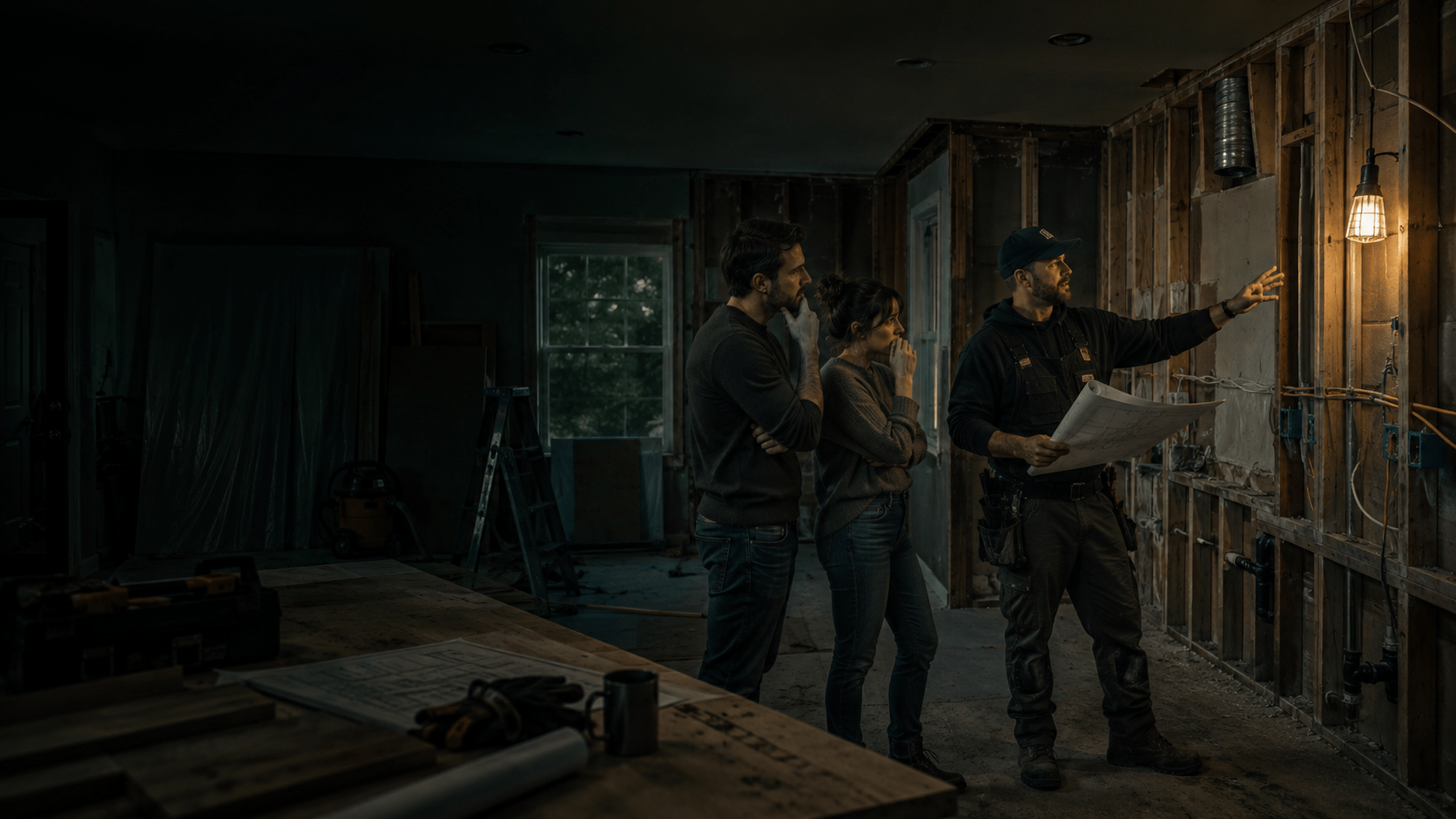
The wall opens... and the electrical doesn't make sense.
Demolition begins.
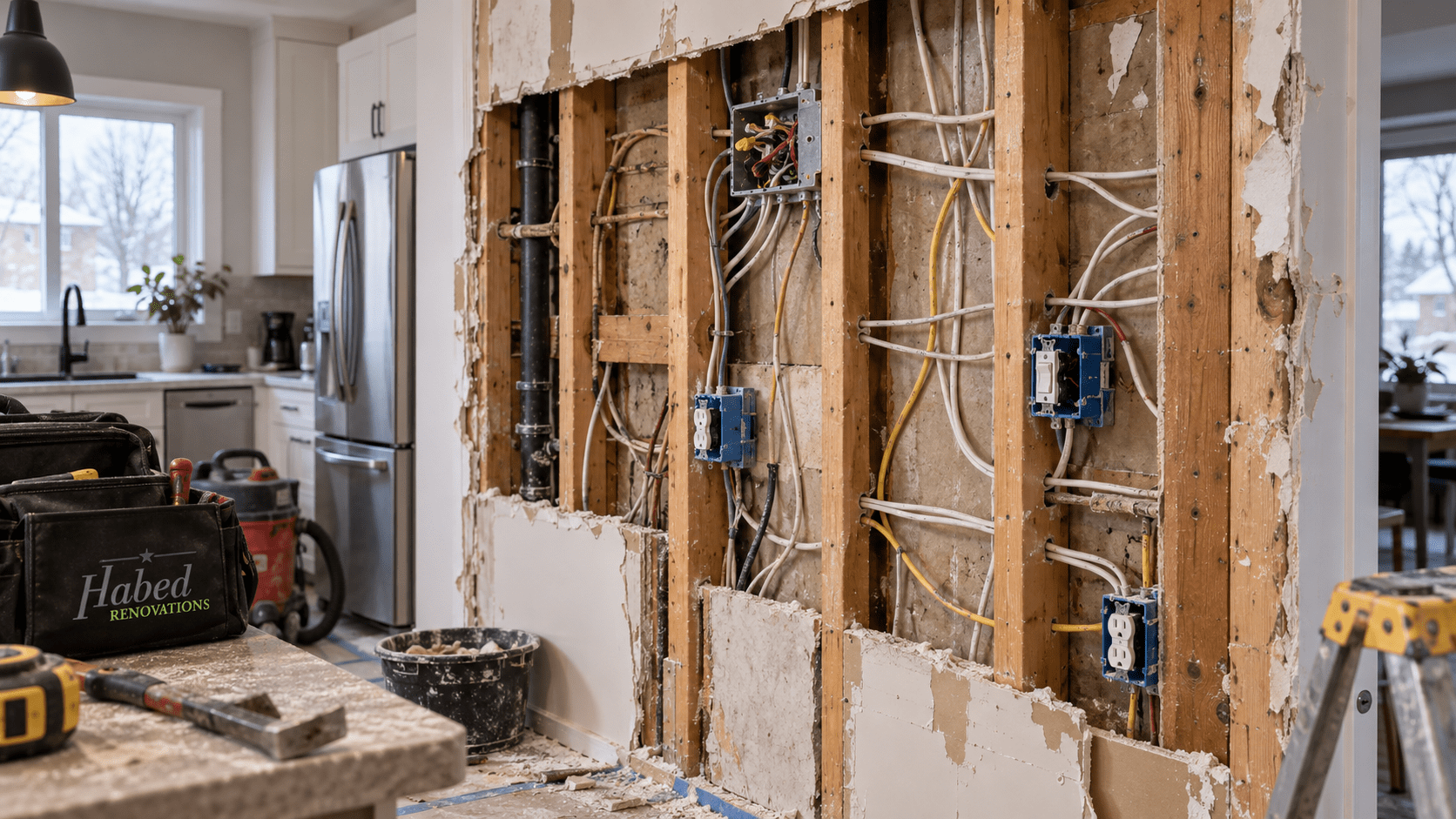
Once the old cabinets and drywall are removed, several electrical wires become visible.
One cable disappears into the ceiling. Another seems to have been added during an older renovation.
Then someone notices a connection hidden behind where the old cabinets used to be.
Now Sarah and Daniel own the problem.
They need to figure out who to call, explain what they discovered and find an electrician who can come to the house.
They also have to decide which parts of the renovation can continue while they wait.
- Find an available electrician
- Explain an installation they did not create
- Understand the proposed solution
- Decide whether the quote is reasonable
- Reorganize the next steps themselves
The surprise is still real. The management is different.
The contractor identifies that the electrical needs to be reviewed before the wall is closed.
The electrician is coordinated, the sequence of work is adjusted and Sarah and Daniel are presented with the issue and the available options.
- The trade is coordinated
- The affected work is paused
- Other work can continue where possible
- The owners receive a clear next step
The range hood duct... doesn't actually go outside.
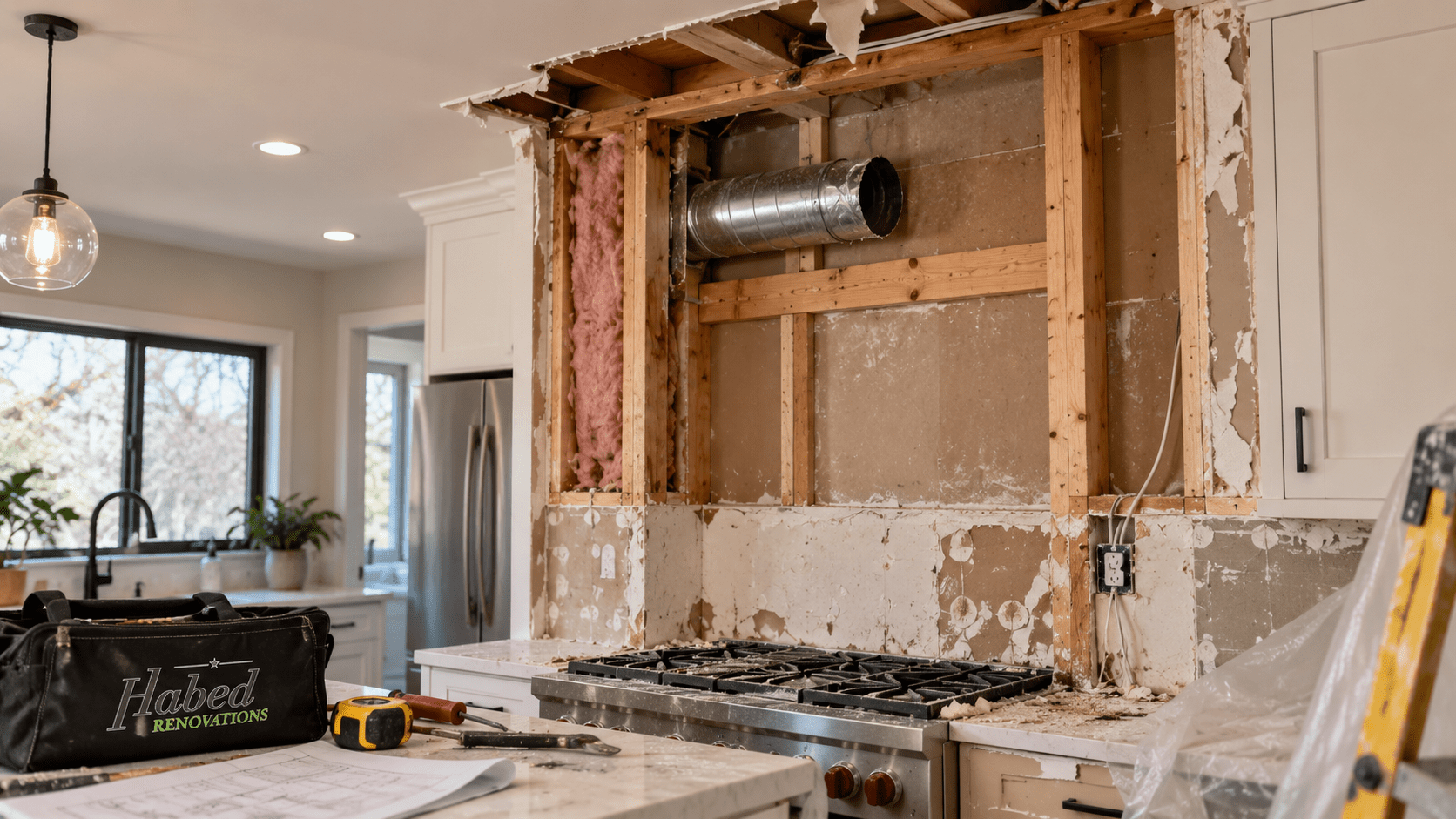
The old range hood is removed.
At first, everything looks normal.
A metal duct runs away from the hood and disappears into the structure.
But while the renovation is open, someone decides to follow it.
Five feet later...
For years, cooking air, grease and moisture were apparently being discharged into a hidden part of the building instead of being properly exhausted outside.
One discovery creates several new questions.
Sarah and Daniel now need to determine where the new duct can travel, what it may need to pass through and who should do the work.
The decision also affects the new hood, cabinetry and possibly the schedule.
- Who installs the new duct?
- Where can it exit?
- Will cabinets need to change?
- Does another trade need to come first?
- What happens to the schedule?
The problem becomes part of the project plan.
The contractor evaluates how the discovery affects the upcoming work.
The appropriate trade is coordinated, the route is determined and the kitchen installation sequence is adjusted before the new cabinets hide the area again.
- The issue is identified early
- The right trade is coordinated
- The sequence is adjusted
- The owner approves the proposed solution
Then the drywall comes off behind the sink.
There is staining.
Some material looks darker than expected.
Part of the wall feels softer than the surrounding area.
Nobody wants to jump to conclusions.
But everybody agrees on one thing:
The renovation becomes a management job.
Sarah and Daniel now have to decide who should inspect the area, whether another trade is required, what materials need to be removed and how long the kitchen work should wait.
They may still solve the problem perfectly. But the responsibility for organizing every step belongs to them.
The surprise does not disappear.
The contractor still has to stop, investigate and explain the consequences.
But Sarah and Daniel do not suddenly become project managers.
They are brought into the decisions while the contractor manages how those decisions affect the work.

So what was actually different?
The electrical issue happened in both renovations.
The incorrect range hood duct happened in both renovations.
The hidden moisture happened in both renovations.
Hiring a contractor did not magically prevent the house from having surprises.
It means the surprises don't automatically become your full-time job.
Sarah and Daniel manage both the renovation and the unexpected problems.
- Find the trades
- Compare quotes
- Understand each recommendation
- Coordinate schedules
- Order materials
- Decide what work can continue
- Manage delays themselves
Sarah and Daniel still make important decisions.
But someone else manages how those decisions affect the renovation as a whole.
- Trades are coordinated
- The sequence is adjusted
- Problems are documented
- Options are presented
- The owners approve the direction
- The renovation continues
How would you have handled the renovation?
Renovation is not only about doing the work.
It is also about knowing what comes next when the original plan stops matching what is actually inside the house.
DIY renovation can absolutely work for homeowners who have the time, knowledge and willingness to manage the process themselves.
A general contractor provides something different:
coordination, experience, sequencing and responsibility for managing the project when unexpected conditions appear.
You don't need a renovation with zero surprises.
You need a plan for what happens when surprises appear.
Explore our renovation projects or tell Habed Renovations about your project.
About this story: Sarah and Daniel are fictional characters. The situations described in this article are inspired by issues that can occur during real residential renovation projects. Certain details have been simplified or combined for storytelling purposes.